Professional Rug Appraisal in Dallas Uncover the True Value of Your Antique Rug
You just inherited your grandmother elegantly complex and grand dining room rug. Or you might have come across what appears to be an antique finish at a Highland Park sale.
At present, it residing in your living room, serving as a luxurious dog bed, and you are left wondering the following:
Is this thing actually worth money, or did I just drag a giant piece of glorified polyester into my house?
Throwing it out, ignoring it, or offering it at a garage sale for just fifty bucks is a big risk. We have witnessed Dallas residents disposing of genuine, hand-knotted Persian masterpieces for a fraction of their value only because they were unaware of what they had.
If determining the actual value of your carpet is what you are after, getting a professional rug appraisal in Dallas is not just a good idea; it is the only way of safeguarding your monetary resources.
We will dissect what makes an antique rug valuable, how to differentiate between a fake and a genuine one from your living room, and the reasons why a certified valuation could be the most financially beneficial decision you make this year.
The Hidden Treasure Beneath Your Feet
Dallas is a city with a concentration of exceptional residences and accumulated wealth over generations, which naturally indicates that large quantities of expensive antique and Oriental rugs are being sold or even stolen from local estates.
However, the antique rug market is known for being very complicated. The aesthetic appeal of a rug alone is not the main factor in determining its value. In fact, it depends on very tiny details that a layperson is completely unaware of.
For example, a genuine Heriz rug from the 19th century and a recent factory-made copy may be indistinguishable at a distance of five feet. One has a value of $15,000.00; the other hardly deserves $150. You are essentially blind without a certified professional to examine the fabric.
What Exactly Is a Professional Rug Appraisal?
A comprehensive professional rug appraisal is not just about giving a quick look and a nod. It is a legally enforceable, thoroughly recorded assessment of a rug origin, age, quality, and fair market price.
An Appraisal versus a Guesstimate
If you take a fuzzy photo of your rug and post it on a Reddit forum or use Google Lens, it wont be a real appraisal.
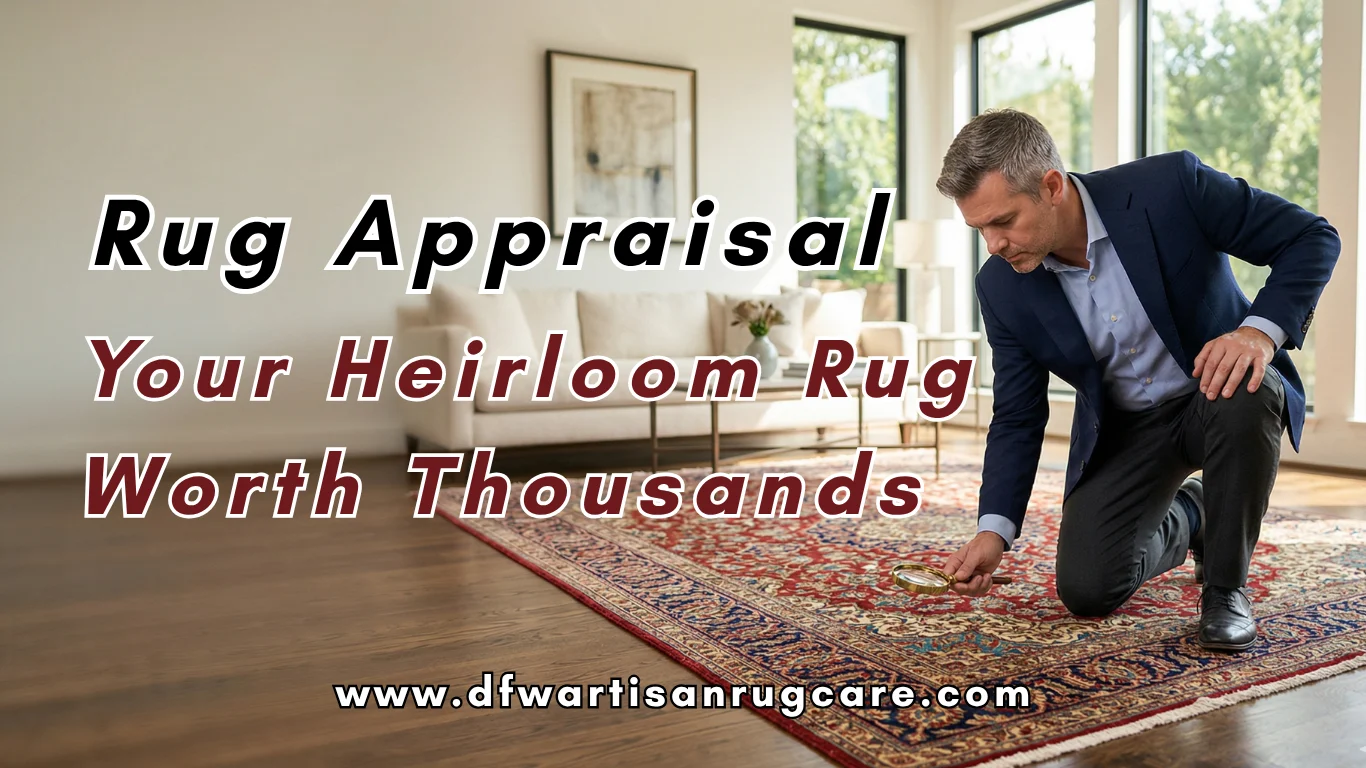
An expert Oriental rug appraiser in Texas will identify the material of the foundation threads, the types of dyes used, and the methods of knotting by physically handling the rug and using a magnifying glass. They issue to you formal paperwork that insurance firms, lawyers dealing with estates, and auction houses accept.
4 Times You Absolutely Need an Official Valuation
Some people might just be fine with a brief note about the IKEA runner. But if you are after a professional rug appraisal in Dallas, then you must be one of the following categories:
- Insurance Coverage: Typically, homeowner insurance doesnt cover expensive pieces of art or antiques unless a specific "rider" is included. To get that rider, you must have an appraisal.
- Estate Planning and Inheritance: If you are allocating assets among family members, you will need the exact antique carpet value to make sure everyone gets a fair share.
- Pre-Sale: Dont ever hand over your heirloom rug to the dealer without first knowing its fair market value.
- Damage Claims: In case a pipe breaks or your rug gets damaged in a move, an appraisal indicates what the rug was worth before the damage happened.
The Anatomy of a High-Value Heirloom Rug What Appraisers Look For
Once a hand-knotted rug assessment starts, appraisers resemble textile detectives. They try to find particular signs of quality, age, and rarity. Below is the very criteria they employ to figure out whether your rug is a treasure or a copy.
Origin and Provenance: The Tale Inside
Generally, the country, city, and even the specific tribe that created the rug are the main factors in determining its price.
- Persian Rugs: Crafted in Iran, these are considered the highest level. Cities like Tabriz, Isfahan, and Kashan are well-known for their extremely fine and very desirable pieces.
- Turkish (Oushak) Rugs: Known for their bigger knots, patterns of larger scale, and softer, pastel colors. They are very popular in modern interior design, tremendously increasing their value.
- Caucasian Rugs: Produced in the Caucasus mountains, features strong, geometric tribal patterns.
An expert rug appraiser will closely examine the pattern and technique of weaving to determine the location of the rug production, sometimes even to the exact village.
Knot Density (KPSI) and Craftsmanship
KPSI is an acronym for Knots Per Square Inch, and it is basically the rug world way of referring to the pixel resolution of a TV.
The higher the KPSI, the more time the weaver probably spent on creating the piece, allowing for the making of sharply detailed, more intricate, and curved designs. A regular hand-knotted rug might have between 50 and 100 KPSI. A wool-silk rug of rarity from Isfahan, for instance, might have a tensile strength of over 500 KPSI. Your evaluator will quite literally turn the rug over and count the knots in a one-inch square.
Age, Dyes, and Materials: The Vegetable vs. Synthetic Divide
It is not necessarily the case that older is always better. However, a genuine antique (over 100 years old) that is well preserved will definitely be sold at a premium. Experts identify the age of a rug mainly by studying the dyes used on it.
- Vegetable/Natural Dyes: Used until the late 1800s, these dyes consist of madder root (reds), indigo (blues), and walnut husks (browns). They develop a charm of their own through the years, fading into a soft "patina."
- Synthetic/Aniline Dyes: These entered the market in the late 19th century. At first, synthetic dyes were known for being so harsh that their colors faded very quickly.
The presence of natural dyes and hand-spun wool in your one-of-a-kind piece will definitely both boost its price.
Pro Tip: Examine the colored fields of your rug with a magnifier. If you find differences in the intensity of the same color, that is a very strong sign of authentic, hand-spun wool and natural dyes. In contrast, machine-made rugs are colored by using perfectly uniform shades.
DIY Check: How to Tell if Your Rug is Genuine or a Machine-Made Copy
Even before you get in touch with the Dallas-Fort Worth rug professionals, you can quickly do a 60-second test at home to determine whether your rug is hand-knotted (and hence valuable) or machine-made (with almost no resale value).
Flip Test
Roll the carpet and check the reverse side.
- Hand-Knotted: The design on the reverse will be as vibrant as the one on the front. You will notice that individual knots are a bit irregular.
- Machine-Made: The backside will resemble mesh plastic or will be covered heavily with latex glue to keep the fibers in place.
Fringe Factor
Look at the tassels (the fringes at the short sides of the rug).
- Hand-Knotted: The fringe actually forms the inner structure of the rug. The threads run all the way through the rug body and out the ends.
- Machine-Made: Usually, the fringe is simply attached by sewing or gluing to the rug ends. So, if you turn the rug over and find a stitch line joining the fringe, you cannot call it authentic.
The Rug Appraisal Process in Dallas: What to Expect
When your rug has passed the initial DIY checks, you are ready to call in an expert. Below you will find the outline of the usual rug appraisal process in Dallas.
Step 1: Thorough Examination and Recognition
The appraiser will do an on-site evaluation of the rug. First of all, they will take its correct measurement, figure out the fibers (wool, silk, cotton), find out the types of dyes, and determine the exact place of origin, along with the approximate date of manufacture. They will also register any kind of wear and tear, moth damage, or signs of earlier rug restoration, since these factors largely determine the value of the rug.
Step 2: Current Market Study
After the identification of the rug, the appraiser re-evaluates the property by studying the present market. A rug price is actually the amount that a person is ready to pay for it today. If Oushak rugs are currently popular among Dallas interior design circles, your appraisal will indicate the level of demand. They will assess your piece against recent auction records and prices in shops.
Step 3: The Final Certified Documentation
What you get is an official letter containing the following:
- Detailed photographs of the rug.
- Comprehensive technical description (place of origin, age, KPSI, materials).
- A report of the condition.
- Final estimated value (usually expressed as Fair Market Value or Retail Replacement Value).
FAQs
How much does a professional rug appraisal cost?
In the Dallas area, a professional appraisal typically ranges from $150 to $300 per rug, depending on the complexity of the piece and whether the appraiser travels to your home.
Can I get an appraisal online?
You can get a rough estimate online via photos, but no insurance company or estate lawyer will accept an online-only appraisal. Tactile examination is strictly required to verify materials and knotting.
Will cleaning my rug increase its appraised value?
Yes, but only if you use a professional who specializes in hand-knotted textiles. Taking an antique Persian rug to a standard carpet steam-cleaner can ruin the dyes and destroy the wool, instantly tanking its value. Always seek out specialized rug restoration in Dallas.
Dont Let Your Heirloom Lose Its Value
Your heirloom rug is more than just floor decor; it is a woven piece of history and a potentially significant financial asset.
Whether you are looking to insure a recent purchase, settle an estate, or you simply want to know if the rug youve been walking on for a decade is secretly a masterpiece, guessing isnt a strategy. Are you ready to uncover the true worth of your textile?
Dont wait until it damaged or lost to find out its value. Book a professional rug appraisal in Dallas today to protect your investment, secure your insurance, and finally solve the mystery of your heirloom rug.
No comments yet. Be the first!